









Geometry inspection during spot welding
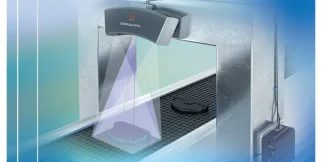
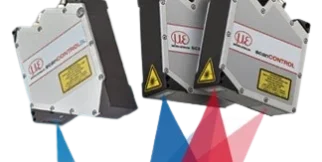
In car body production, the quality of the spot welds is a decisive criterion for stability and safety. Classic 2D vision systems quickly reach their limits here, as they only provide contrast information and do not allow reliable statements to be made about the geometric characteristics of the spot welds. The surfaceCONTROL 3D snapshot sensors, on the other hand, capture the complete geometry of the welding spot as a high-resolution point cloud in a single measurement process. This allows parameters such as height, diameter, shape and position to be precisely determined and automatically compared with the target values. Deviations or faulty points are detected immediately so that rework or waste can be minimized. In car body production, the quality of the spot welds is a decisive criterion for stability and safety. Classic 2D vision systems quickly reach their limits here, as they only provide contrast information and do not allow reliable statements to be made about the geometric characteristics of the spot welds. The surfaceCONTROL 3D snapshot sensors, on the other hand, capture the complete geometry of the welding spot as a high-resolution point cloud in a single measurement process. This allows parameters such as height, diameter, shape and position to be precisely determined and automatically compared with the target values. Deviations or faulty points are detected immediately so that rework or waste can be minimized.
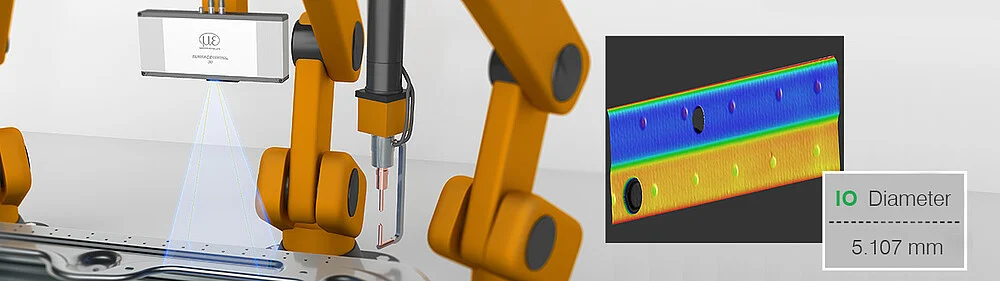
In car body production, the quality of the spot welds is a decisive criterion for stability and safety. Classic 2D vision systems quickly reach their limits here, as they only provide contrast information and do not allow reliable statements to be made about the geometric characteristics of the spot welds. The surfaceCONTROL 3D snapshot sensors, on the other hand, capture the complete geometry of the welding spot as a high-resolution point cloud in a single measurement process. This allows parameters such as height, diameter, shape and position to be precisely determined and automatically compared with the target values. Deviations or faulty points are detected immediately so that rework or waste can be minimized. In car body production, the quality of the spot welds is a decisive criterion for stability and safety. Classic 2D vision systems quickly reach their limits here, as they only provide contrast information and do not allow reliable statements to be made about the geometric characteristics of the spot welds. The surfaceCONTROL 3D snapshot sensors, on the other hand, capture the complete geometry of the welding spot as a high-resolution point cloud in a single measurement process. This allows parameters such as height, diameter, shape and position to be precisely determined and automatically compared with the target values. Deviations or faulty points are detected immediately so that rework or waste can be minimized.
Application challenge
In car body production, the quality of the spot welds is a decisive criterion for stability and safety. Classic 2D vision systems quickly reach their limits here, as they only provide contrast information and do not allow reliable statements to be made about the geometric characteristics of the spot welds. The surfaceCONTROL 3D snapshot sensors, on the other hand, capture the complete geometry of the welding spot as a high-resolution point cloud in a single measurement process. This allows parameters such as height, diameter, shape and position to be precisely determined and automatically compared with the target values. Deviations or faulty points are detected immediately so that rework or waste can be minimized.
Measurement method and system
In car body production, the quality of the spot welds is a decisive criterion for stability and safety. Classic 2D vision systems quickly reach their limits here, as they only provide contrast information and do not allow reliable statements to be made about the geometric characteristics of the spot welds. The surfaceCONTROL 3D snapshot sensors, on the other hand, capture the complete geometry of the welding spot as a high-resolution point cloud in a single measurement process. This allows parameters such as height, diameter, shape and position to be precisely determined and automatically compared with the target values. Deviations or faulty points are detected immediately so that rework or waste can be minimized.
The problem
In car body production, the quality of the spot welds is a decisive criterion for stability and safety. Classic 2D vision systems quickly reach their limits here, as they only provide contrast information and do not allow reliable statements to be made about the geometric characteristics of the spot welds. The surfaceCONTROL 3D snapshot sensors, on the other hand, capture the complete geometry of the welding spot as a high-resolution point cloud in a single measurement process. This allows parameters such as height, diameter, shape and position to be precisely determined and automatically compared with the target values. Deviations or faulty points are detected immediately so that rework or waste can be minimized.
The method
In car body production, the quality of the spot welds is a decisive criterion for stability and safety. Classic 2D vision systems quickly reach their limits here, as they only provide contrast information and do not allow reliable statements to be made about the geometric characteristics of the spot welds. The surfaceCONTROL 3D snapshot sensors, on the other hand, capture the complete geometry of the welding spot as a high-resolution point cloud in a single measurement process. This allows parameters such as height, diameter, shape and position to be precisely determined and automatically compared with the target values. Deviations or faulty points are detected immediately so that rework or waste can be minimized.