










Measurement of the crankshaft position in grinding machines
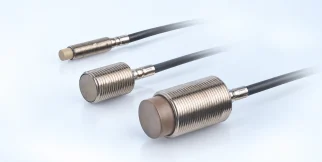
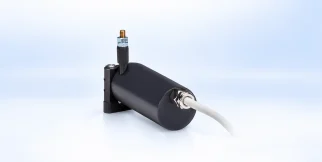
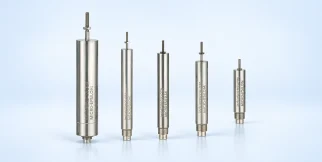
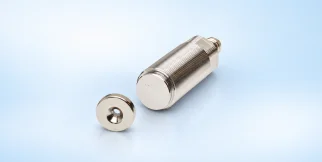
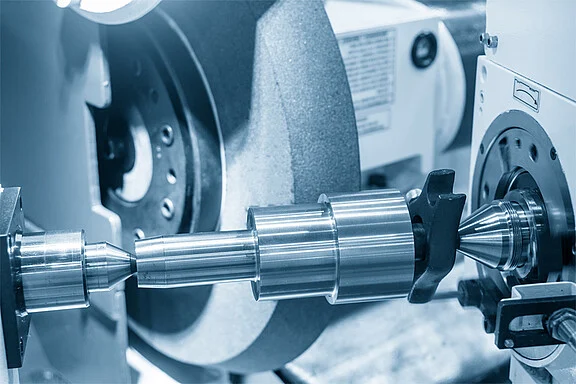
This task involves the position measurement of the crankshaft with micrometer precision using eddy current-based inductive sensors. Both a continuous distance control and a consistent distance from the grinding tool are required. The analog sensor signal is therefore transmitted to a PLC. It adjusts the position of the grinding tool based on the measured values. Since cooling liquid (oil) is used for the grinding process, inductive sensors are perfectly suited. The application solution can also be integrated into existing systems as a retrofit. This task involves the position measurement of the crankshaft with micrometer precision using eddy current-based inductive sensors. Both a continuous distance control and a consistent distance from the grinding tool are required. The analog sensor signal is therefore transmitted to a PLC. It adjusts the position of the grinding tool based on the measured values. Since cooling liquid (oil) is used for the grinding process, inductive sensors are perfectly suited. The application solution can also be integrated into existing systems as a retrofit.
This task involves the position measurement of the crankshaft with micrometer precision using eddy current-based inductive sensors. Both a continuous distance control and a consistent distance from the grinding tool are required. The analog sensor signal is therefore transmitted to a PLC. It adjusts the position of the grinding tool based on the measured values. Since cooling liquid (oil) is used for the grinding process, inductive sensors are perfectly suited. The application solution can also be integrated into existing systems as a retrofit. This task involves the position measurement of the crankshaft with micrometer precision using eddy current-based inductive sensors. Both a continuous distance control and a consistent distance from the grinding tool are required. The analog sensor signal is therefore transmitted to a PLC. It adjusts the position of the grinding tool based on the measured values. Since cooling liquid (oil) is used for the grinding process, inductive sensors are perfectly suited. The application solution can also be integrated into existing systems as a retrofit.
Application challenge
This task involves the position measurement of the crankshaft with micrometer precision using eddy current-based inductive sensors. Both a continuous distance control and a consistent distance from the grinding tool are required. The analog sensor signal is therefore transmitted to a PLC. It adjusts the position of the grinding tool based on the measured values. Since cooling liquid (oil) is used for the grinding process, inductive sensors are perfectly suited. The application solution can also be integrated into existing systems as a retrofit.
Measurement method and system
This task involves the position measurement of the crankshaft with micrometer precision using eddy current-based inductive sensors. Both a continuous distance control and a consistent distance from the grinding tool are required. The analog sensor signal is therefore transmitted to a PLC. It adjusts the position of the grinding tool based on the measured values. Since cooling liquid (oil) is used for the grinding process, inductive sensors are perfectly suited. The application solution can also be integrated into existing systems as a retrofit.
The problem
This task involves the position measurement of the crankshaft with micrometer precision using eddy current-based inductive sensors. Both a continuous distance control and a consistent distance from the grinding tool are required. The analog sensor signal is therefore transmitted to a PLC. It adjusts the position of the grinding tool based on the measured values. Since cooling liquid (oil) is used for the grinding process, inductive sensors are perfectly suited. The application solution can also be integrated into existing systems as a retrofit.
The method
This task involves the position measurement of the crankshaft with micrometer precision using eddy current-based inductive sensors. Both a continuous distance control and a consistent distance from the grinding tool are required. The analog sensor signal is therefore transmitted to a PLC. It adjusts the position of the grinding tool based on the measured values. Since cooling liquid (oil) is used for the grinding process, inductive sensors are perfectly suited. The application solution can also be integrated into existing systems as a retrofit.