















Measuring the electrode travel in resistance welding
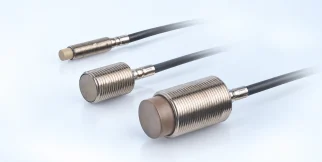
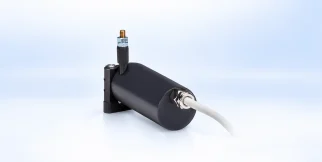
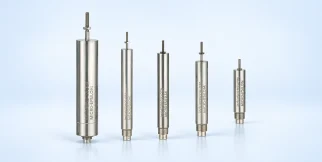
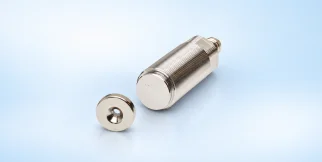
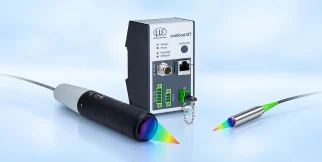
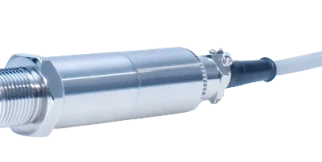
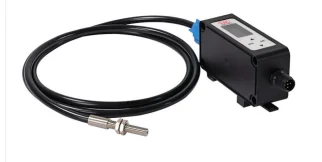
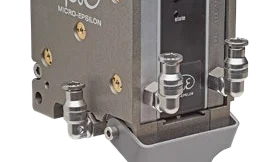
In automatic welding machines, eddy current sensors from Micro-Epsilon ensure high quality welded joints while measuring the travel of the electrodes. The non-contact displacement sensors detect the axial displacement which is influenced by thermal and mechanical factors. These robust sensors are insensitive to welding currents, vibrations and fluctuating temperatures. Therefore, they also operate reliably under harsh environmental conditions. Their high frequency response and resolution enable the eddy current sensors to dynamically control the electrode position while they also ensure high repeatability. In automatic welding machines, eddy current sensors from Micro-Epsilon ensure high quality welded joints while measuring the travel of the electrodes. The non-contact displacement sensors detect the axial displacement which is influenced by thermal and mechanical factors. These robust sensors are insensitive to welding currents, vibrations and fluctuating temperatures. Therefore, they also operate reliably under harsh environmental conditions. Their high frequency response and resolution enable the eddy current sensors to dynamically control the electrode position while they also ensure high repeatability.

In automatic welding machines, eddy current sensors from Micro-Epsilon ensure high quality welded joints while measuring the travel of the electrodes. The non-contact displacement sensors detect the axial displacement which is influenced by thermal and mechanical factors. These robust sensors are insensitive to welding currents, vibrations and fluctuating temperatures. Therefore, they also operate reliably under harsh environmental conditions. Their high frequency response and resolution enable the eddy current sensors to dynamically control the electrode position while they also ensure high repeatability. In automatic welding machines, eddy current sensors from Micro-Epsilon ensure high quality welded joints while measuring the travel of the electrodes. The non-contact displacement sensors detect the axial displacement which is influenced by thermal and mechanical factors. These robust sensors are insensitive to welding currents, vibrations and fluctuating temperatures. Therefore, they also operate reliably under harsh environmental conditions. Their high frequency response and resolution enable the eddy current sensors to dynamically control the electrode position while they also ensure high repeatability.
Application challenge
In automatic welding machines, eddy current sensors from Micro-Epsilon ensure high quality welded joints while measuring the travel of the electrodes. The non-contact displacement sensors detect the axial displacement which is influenced by thermal and mechanical factors. These robust sensors are insensitive to welding currents, vibrations and fluctuating temperatures. Therefore, they also operate reliably under harsh environmental conditions. Their high frequency response and resolution enable the eddy current sensors to dynamically control the electrode position while they also ensure high repeatability.
Measurement method and system
In automatic welding machines, eddy current sensors from Micro-Epsilon ensure high quality welded joints while measuring the travel of the electrodes. The non-contact displacement sensors detect the axial displacement which is influenced by thermal and mechanical factors. These robust sensors are insensitive to welding currents, vibrations and fluctuating temperatures. Therefore, they also operate reliably under harsh environmental conditions. Their high frequency response and resolution enable the eddy current sensors to dynamically control the electrode position while they also ensure high repeatability.
The problem
In automatic welding machines, eddy current sensors from Micro-Epsilon ensure high quality welded joints while measuring the travel of the electrodes. The non-contact displacement sensors detect the axial displacement which is influenced by thermal and mechanical factors. These robust sensors are insensitive to welding currents, vibrations and fluctuating temperatures. Therefore, they also operate reliably under harsh environmental conditions. Their high frequency response and resolution enable the eddy current sensors to dynamically control the electrode position while they also ensure high repeatability.
The method
In automatic welding machines, eddy current sensors from Micro-Epsilon ensure high quality welded joints while measuring the travel of the electrodes. The non-contact displacement sensors detect the axial displacement which is influenced by thermal and mechanical factors. These robust sensors are insensitive to welding currents, vibrations and fluctuating temperatures. Therefore, they also operate reliably under harsh environmental conditions. Their high frequency response and resolution enable the eddy current sensors to dynamically control the electrode position while they also ensure high repeatability.