








Positioning of suction pipes for suction dredgers
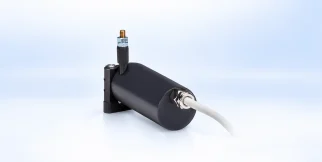
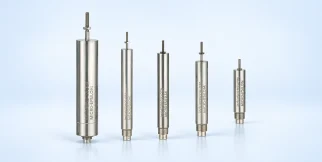
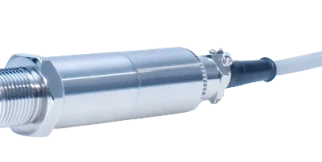
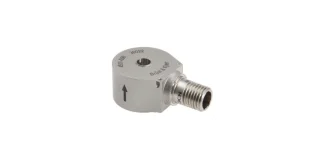
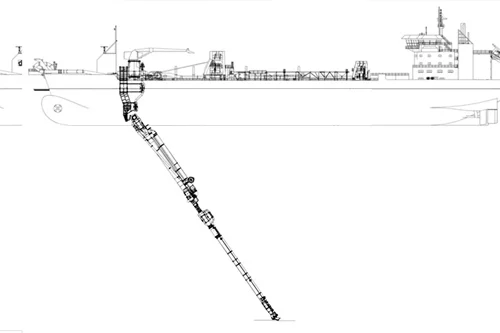
Suction dredgers are seagoing vessels that collect sand and silt from the seabed in order to transport it over long distances. They are used for the construction and maintenance of ports and waterways as well as for land reclamation. On the end of the suction pipe a so-called trailing drag head is connected which is moved along the seabed in order to suck in the sediments. To enable the dredgers to work precisely and to avoid costly reworking, the suction pipes are positioned with high accuracy. For positioning tasks, the precise and dynamically compensated inertialSENSOR INC5701 inclination sensors are used. These sensors are installed in a water- and pressure-tight stainless steel housing underwater on the suction pipe. Suction dredgers are seagoing vessels that collect sand and silt from the seabed in order to transport it over long distances. They are used for the construction and maintenance of ports and waterways as well as for land reclamation. On the end of the suction pipe a so-called trailing drag head is connected which is moved along the seabed in order to suck in the sediments. To enable the dredgers to work precisely and to avoid costly reworking, the suction pipes are positioned with high accuracy. For positioning tasks, the precise and dynamically compensated inertialSENSOR INC5701 inclination sensors are used. These sensors are installed in a water- and pressure-tight stainless steel housing underwater on the suction pipe.
Suction dredgers are seagoing vessels that collect sand and silt from the seabed in order to transport it over long distances. They are used for the construction and maintenance of ports and waterways as well as for land reclamation. On the end of the suction pipe a so-called trailing drag head is connected which is moved along the seabed in order to suck in the sediments. To enable the dredgers to work precisely and to avoid costly reworking, the suction pipes are positioned with high accuracy. For positioning tasks, the precise and dynamically compensated inertialSENSOR INC5701 inclination sensors are used. These sensors are installed in a water- and pressure-tight stainless steel housing underwater on the suction pipe. Suction dredgers are seagoing vessels that collect sand and silt from the seabed in order to transport it over long distances. They are used for the construction and maintenance of ports and waterways as well as for land reclamation. On the end of the suction pipe a so-called trailing drag head is connected which is moved along the seabed in order to suck in the sediments. To enable the dredgers to work precisely and to avoid costly reworking, the suction pipes are positioned with high accuracy. For positioning tasks, the precise and dynamically compensated inertialSENSOR INC5701 inclination sensors are used. These sensors are installed in a water- and pressure-tight stainless steel housing underwater on the suction pipe.
Application challenge
Suction dredgers are seagoing vessels that collect sand and silt from the seabed in order to transport it over long distances. They are used for the construction and maintenance of ports and waterways as well as for land reclamation. On the end of the suction pipe a so-called trailing drag head is connected which is moved along the seabed in order to suck in the sediments. To enable the dredgers to work precisely and to avoid costly reworking, the suction pipes are positioned with high accuracy. For positioning tasks, the precise and dynamically compensated inertialSENSOR INC5701 inclination sensors are used. These sensors are installed in a water- and pressure-tight stainless steel housing underwater on the suction pipe.
Measurement method and system
Suction dredgers are seagoing vessels that collect sand and silt from the seabed in order to transport it over long distances. They are used for the construction and maintenance of ports and waterways as well as for land reclamation. On the end of the suction pipe a so-called trailing drag head is connected which is moved along the seabed in order to suck in the sediments. To enable the dredgers to work precisely and to avoid costly reworking, the suction pipes are positioned with high accuracy. For positioning tasks, the precise and dynamically compensated inertialSENSOR INC5701 inclination sensors are used. These sensors are installed in a water- and pressure-tight stainless steel housing underwater on the suction pipe.
The problem
Suction dredgers are seagoing vessels that collect sand and silt from the seabed in order to transport it over long distances. They are used for the construction and maintenance of ports and waterways as well as for land reclamation. On the end of the suction pipe a so-called trailing drag head is connected which is moved along the seabed in order to suck in the sediments. To enable the dredgers to work precisely and to avoid costly reworking, the suction pipes are positioned with high accuracy. For positioning tasks, the precise and dynamically compensated inertialSENSOR INC5701 inclination sensors are used. These sensors are installed in a water- and pressure-tight stainless steel housing underwater on the suction pipe.
The method
Suction dredgers are seagoing vessels that collect sand and silt from the seabed in order to transport it over long distances. They are used for the construction and maintenance of ports and waterways as well as for land reclamation. On the end of the suction pipe a so-called trailing drag head is connected which is moved along the seabed in order to suck in the sediments. To enable the dredgers to work precisely and to avoid costly reworking, the suction pipes are positioned with high accuracy. For positioning tasks, the precise and dynamically compensated inertialSENSOR INC5701 inclination sensors are used. These sensors are installed in a water- and pressure-tight stainless steel housing underwater on the suction pipe.