














Distance control of print heads for glass printing
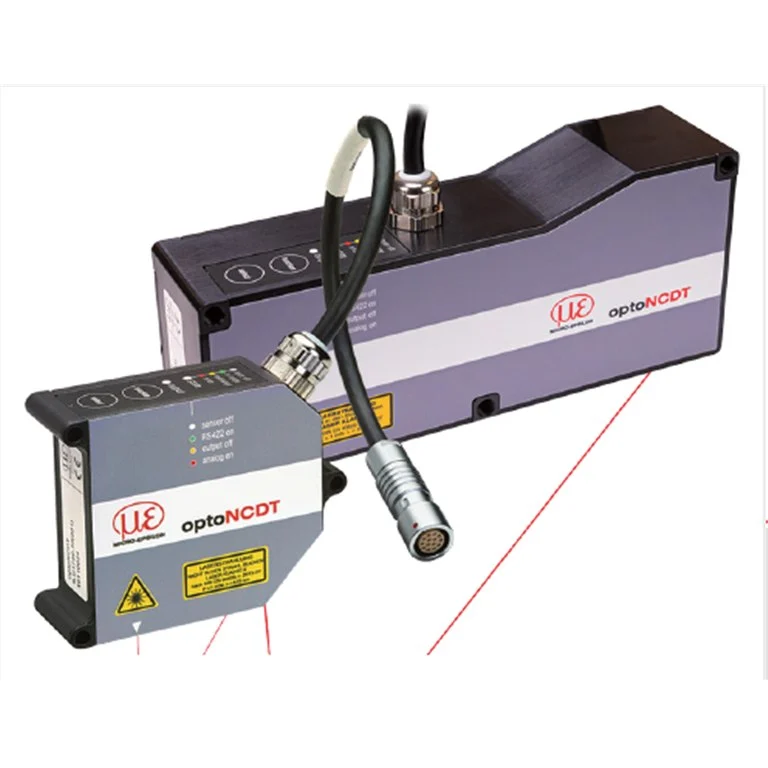
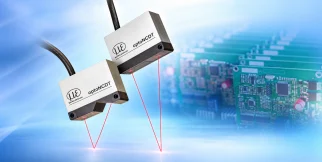
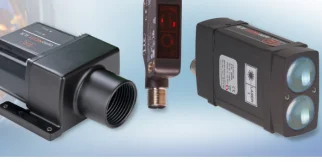
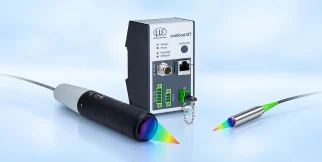
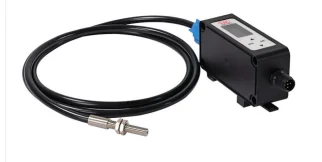
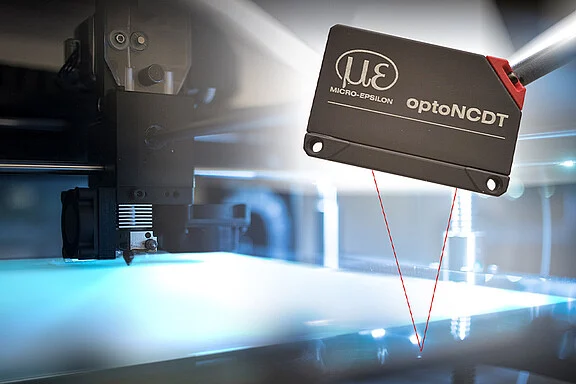
When printing on materials such as glass and ceramics, very fine detailed structures are applied on the carrier material, which requires precise positioning of the print head. For distance measurements, optoNCDT 1420 laser triangulation sensors from Micro-Epsilon are used. With a measuring range of 10mm, these determine at various points in the print head the respective distance from the surface to be printed. The data obtained enables the determination of the edges and the surface tilt and therefore the exact positioning of the print head. When printing on materials such as glass and ceramics, very fine detailed structures are applied on the carrier material, which requires precise positioning of the print head. For distance measurements, optoNCDT 1420 laser triangulation sensors from Micro-Epsilon are used. With a measuring range of 10mm, these determine at various points in the print head the respective distance from the surface to be printed. The data obtained enables the determination of the edges and the surface tilt and therefore the exact positioning of the print head.
When printing on materials such as glass and ceramics, very fine detailed structures are applied on the carrier material, which requires precise positioning of the print head. For distance measurements, optoNCDT 1420 laser triangulation sensors from Micro-Epsilon are used. With a measuring range of 10mm, these determine at various points in the print head the respective distance from the surface to be printed. The data obtained enables the determination of the edges and the surface tilt and therefore the exact positioning of the print head. When printing on materials such as glass and ceramics, very fine detailed structures are applied on the carrier material, which requires precise positioning of the print head. For distance measurements, optoNCDT 1420 laser triangulation sensors from Micro-Epsilon are used. With a measuring range of 10mm, these determine at various points in the print head the respective distance from the surface to be printed. The data obtained enables the determination of the edges and the surface tilt and therefore the exact positioning of the print head.
Application challenge
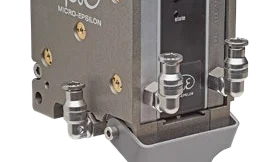
When printing on materials such as glass and ceramics, very fine detailed structures are applied on the carrier material, which requires precise positioning of the print head. For distance measurements, optoNCDT 1420 laser triangulation sensors from Micro-Epsilon are used. With a measuring range of 10mm, these determine at various points in the print head the respective distance from the surface to be printed. The data obtained enables the determination of the edges and the surface tilt and therefore the exact positioning of the print head.
Measurement method and system
When printing on materials such as glass and ceramics, very fine detailed structures are applied on the carrier material, which requires precise positioning of the print head. For distance measurements, optoNCDT 1420 laser triangulation sensors from Micro-Epsilon are used. With a measuring range of 10mm, these determine at various points in the print head the respective distance from the surface to be printed. The data obtained enables the determination of the edges and the surface tilt and therefore the exact positioning of the print head.
The problem
When printing on materials such as glass and ceramics, very fine detailed structures are applied on the carrier material, which requires precise positioning of the print head. For distance measurements, optoNCDT 1420 laser triangulation sensors from Micro-Epsilon are used. With a measuring range of 10mm, these determine at various points in the print head the respective distance from the surface to be printed. The data obtained enables the determination of the edges and the surface tilt and therefore the exact positioning of the print head.
The method
When printing on materials such as glass and ceramics, very fine detailed structures are applied on the carrier material, which requires precise positioning of the print head. For distance measurements, optoNCDT 1420 laser triangulation sensors from Micro-Epsilon are used. With a measuring range of 10mm, these determine at various points in the print head the respective distance from the surface to be printed. The data obtained enables the determination of the edges and the surface tilt and therefore the exact positioning of the print head.