


















Height measurement of wafer bumps
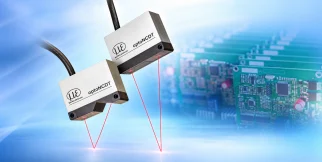
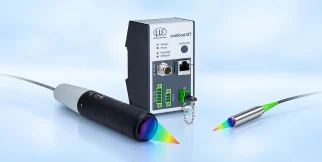
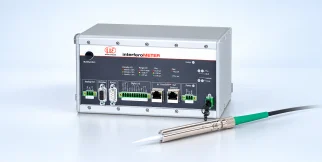
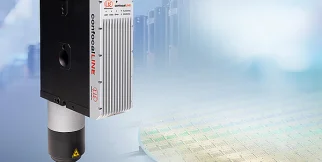
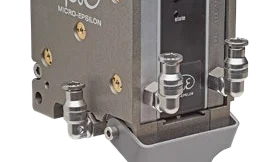
Up to now, the 50 to 350 µm small bumps are normally inspected by camera systems during production. The decisive disadvantage of this method is that only the presence or position is checked. The height can only be determined offline, by means of sections taken with a measuring microscope. Therefore, confocal chromatic sensors from Micro-Epsilon are used here. These measure precisely on the shiny and structured surfaces of the computer chips. Thanks to the focused light spot, a high lateral resolution of around 4 µm is also achieved. Up to now, the 50 to 350 µm small bumps are normally inspected by camera systems during production. The decisive disadvantage of this method is that only the presence or position is checked. The height can only be determined offline, by means of sections taken with a measuring microscope. Therefore, confocal chromatic sensors from Micro-Epsilon are used here. These measure precisely on the shiny and structured surfaces of the computer chips. Thanks to the focused light spot, a high lateral resolution of around 4 µm is also achieved.
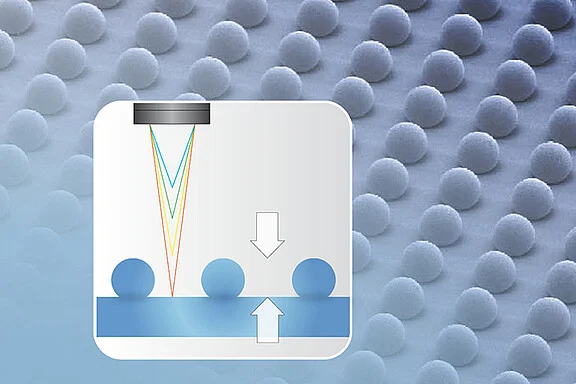
Up to now, the 50 to 350 µm small bumps are normally inspected by camera systems during production. The decisive disadvantage of this method is that only the presence or position is checked. The height can only be determined offline, by means of sections taken with a measuring microscope. Therefore, confocal chromatic sensors from Micro-Epsilon are used here. These measure precisely on the shiny and structured surfaces of the computer chips. Thanks to the focused light spot, a high lateral resolution of around 4 µm is also achieved. Up to now, the 50 to 350 µm small bumps are normally inspected by camera systems during production. The decisive disadvantage of this method is that only the presence or position is checked. The height can only be determined offline, by means of sections taken with a measuring microscope. Therefore, confocal chromatic sensors from Micro-Epsilon are used here. These measure precisely on the shiny and structured surfaces of the computer chips. Thanks to the focused light spot, a high lateral resolution of around 4 µm is also achieved.
Application challenge
Up to now, the 50 to 350 µm small bumps are normally inspected by camera systems during production. The decisive disadvantage of this method is that only the presence or position is checked. The height can only be determined offline, by means of sections taken with a measuring microscope. Therefore, confocal chromatic sensors from Micro-Epsilon are used here. These measure precisely on the shiny and structured surfaces of the computer chips. Thanks to the focused light spot, a high lateral resolution of around 4 µm is also achieved.
Measurement method and system
Up to now, the 50 to 350 µm small bumps are normally inspected by camera systems during production. The decisive disadvantage of this method is that only the presence or position is checked. The height can only be determined offline, by means of sections taken with a measuring microscope. Therefore, confocal chromatic sensors from Micro-Epsilon are used here. These measure precisely on the shiny and structured surfaces of the computer chips. Thanks to the focused light spot, a high lateral resolution of around 4 µm is also achieved.
The problem
Up to now, the 50 to 350 µm small bumps are normally inspected by camera systems during production. The decisive disadvantage of this method is that only the presence or position is checked. The height can only be determined offline, by means of sections taken with a measuring microscope. Therefore, confocal chromatic sensors from Micro-Epsilon are used here. These measure precisely on the shiny and structured surfaces of the computer chips. Thanks to the focused light spot, a high lateral resolution of around 4 µm is also achieved.
The method
Up to now, the 50 to 350 µm small bumps are normally inspected by camera systems during production. The decisive disadvantage of this method is that only the presence or position is checked. The height can only be determined offline, by means of sections taken with a measuring microscope. Therefore, confocal chromatic sensors from Micro-Epsilon are used here. These measure precisely on the shiny and structured surfaces of the computer chips. Thanks to the focused light spot, a high lateral resolution of around 4 µm is also achieved.