













Distance measurements in robot positioning tasks
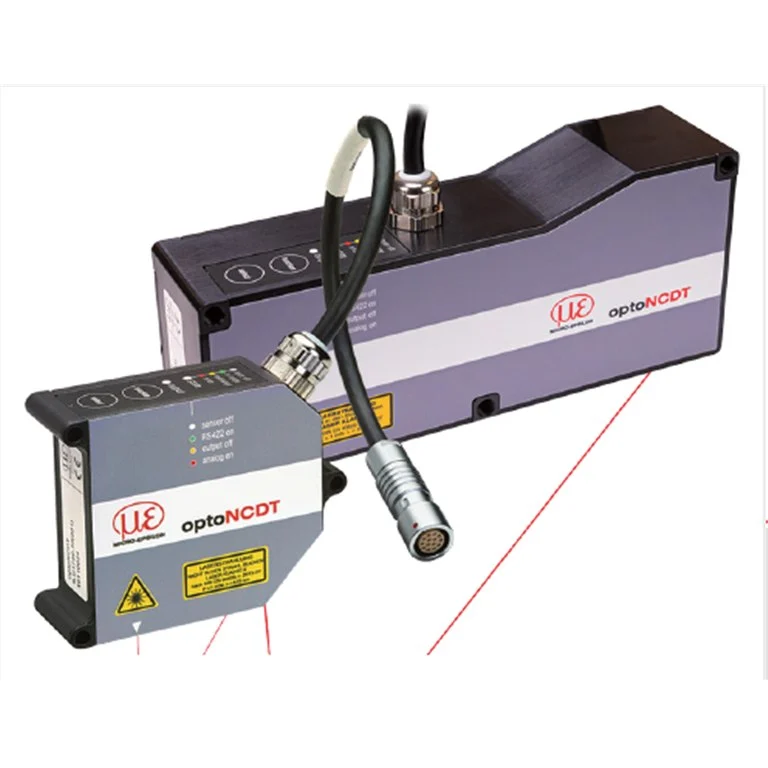
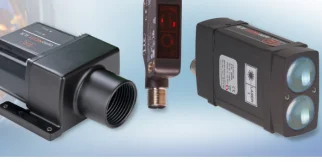
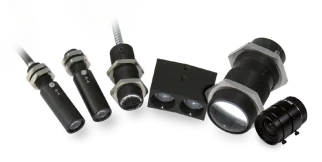
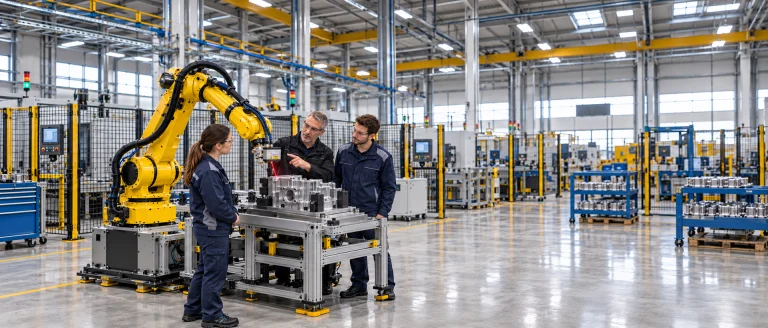
The car body must stop at exactly the intended position. This is the only way to ensure smooth installation via the robot, which must guide the cockpit between the A and B pillars into the vehicle. The correct position at which the car body should stop is determined by optoNCDT ILR1030-8/LC1 time-of-flight laser sensors from MicroEpsilon. They are particularly suitable for these and other comparable applications due to their short response time. The sensor is located on the same side of the assembly line as the assembly robot for cockpit installation. Measurements are taken at 100 Hz at the height of the A and B pillars of the vehicle and at a distance of approx. 600 to 700 mm. The car body must stop at exactly the intended position. This is the only way to ensure smooth installation via the robot, which must guide the cockpit between the A and B pillars into the vehicle. The correct position at which the car body should stop is determined by optoNCDT ILR1030-8/LC1 time-of-flight laser sensors from MicroEpsilon. They are particularly suitable for these and other comparable applications due to their short response time. The sensor is located on the same side of the assembly line as the assembly robot for cockpit installation. Measurements are taken at 100 Hz at the height of the A and B pillars of the vehicle and at a distance of approx. 600 to 700 mm.
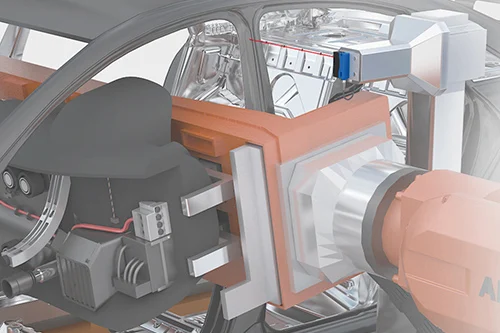
The car body must stop at exactly the intended position. This is the only way to ensure smooth installation via the robot, which must guide the cockpit between the A and B pillars into the vehicle. The correct position at which the car body should stop is determined by optoNCDT ILR1030-8/LC1 time-of-flight laser sensors from MicroEpsilon. They are particularly suitable for these and other comparable applications due to their short response time. The sensor is located on the same side of the assembly line as the assembly robot for cockpit installation. Measurements are taken at 100 Hz at the height of the A and B pillars of the vehicle and at a distance of approx. 600 to 700 mm. The car body must stop at exactly the intended position. This is the only way to ensure smooth installation via the robot, which must guide the cockpit between the A and B pillars into the vehicle. The correct position at which the car body should stop is determined by optoNCDT ILR1030-8/LC1 time-of-flight laser sensors from MicroEpsilon. They are particularly suitable for these and other comparable applications due to their short response time. The sensor is located on the same side of the assembly line as the assembly robot for cockpit installation. Measurements are taken at 100 Hz at the height of the A and B pillars of the vehicle and at a distance of approx. 600 to 700 mm.
Application challenge
The car body must stop at exactly the intended position. This is the only way to ensure smooth installation via the robot, which must guide the cockpit between the A and B pillars into the vehicle. The correct position at which the car body should stop is determined by optoNCDT ILR1030-8/LC1 time-of-flight laser sensors from MicroEpsilon. They are particularly suitable for these and other comparable applications due to their short response time. The sensor is located on the same side of the assembly line as the assembly robot for cockpit installation. Measurements are taken at 100 Hz at the height of the A and B pillars of the vehicle and at a distance of approx. 600 to 700 mm.
Measurement method and system
The car body must stop at exactly the intended position. This is the only way to ensure smooth installation via the robot, which must guide the cockpit between the A and B pillars into the vehicle. The correct position at which the car body should stop is determined by optoNCDT ILR1030-8/LC1 time-of-flight laser sensors from MicroEpsilon. They are particularly suitable for these and other comparable applications due to their short response time. The sensor is located on the same side of the assembly line as the assembly robot for cockpit installation. Measurements are taken at 100 Hz at the height of the A and B pillars of the vehicle and at a distance of approx. 600 to 700 mm.
The problem
The car body must stop at exactly the intended position. This is the only way to ensure smooth installation via the robot, which must guide the cockpit between the A and B pillars into the vehicle. The correct position at which the car body should stop is determined by optoNCDT ILR1030-8/LC1 time-of-flight laser sensors from MicroEpsilon. They are particularly suitable for these and other comparable applications due to their short response time. The sensor is located on the same side of the assembly line as the assembly robot for cockpit installation. Measurements are taken at 100 Hz at the height of the A and B pillars of the vehicle and at a distance of approx. 600 to 700 mm.
The method
The car body must stop at exactly the intended position. This is the only way to ensure smooth installation via the robot, which must guide the cockpit between the A and B pillars into the vehicle. The correct position at which the car body should stop is determined by optoNCDT ILR1030-8/LC1 time-of-flight laser sensors from MicroEpsilon. They are particularly suitable for these and other comparable applications due to their short response time. The sensor is located on the same side of the assembly line as the assembly robot for cockpit installation. Measurements are taken at 100 Hz at the height of the A and B pillars of the vehicle and at a distance of approx. 600 to 700 mm.