
























































Reliable measurement of wear protection on brake discs
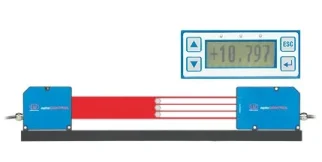
The new EURO 7 emissions standard, which includes standards for brake and tire abrasion for the first time, will apply to new vehicle registrations from the fourth quarter of 2026. In order to comply with the limit values, new brake discs are given a protective coating of tungsten or titanium carbide. Each layer applied is usually 100 to 200 µm thick. To determine the thickness of the individual layers, the distance to the surface is measured before and after each application. The distance values are then calculated either in the associated controller or in an evaluation unit provided by the customer to determine the coating thickness. The new EURO 7 emissions standard, which includes standards for brake and tire abrasion for the first time, will apply to new vehicle registrations from the fourth quarter of 2026. In order to comply with the limit values, new brake discs are given a protective coating of tungsten or titanium carbide. Each layer applied is usually 100 to 200 µm thick. To determine the thickness of the individual layers, the distance to the surface is measured before and after each application. The distance values are then calculated either in the associated controller or in an evaluation unit provided by the customer to determine the coating thickness.
The new EURO 7 emissions standard, which includes standards for brake and tire abrasion for the first time, will apply to new vehicle registrations from the fourth quarter of 2026. In order to comply with the limit values, new brake discs are given a protective coating of tungsten or titanium carbide. Each layer applied is usually 100 to 200 µm thick. To determine the thickness of the individual layers, the distance to the surface is measured before and after each application. The distance values are then calculated either in the associated controller or in an evaluation unit provided by the customer to determine the coating thickness. The new EURO 7 emissions standard, which includes standards for brake and tire abrasion for the first time, will apply to new vehicle registrations from the fourth quarter of 2026. In order to comply with the limit values, new brake discs are given a protective coating of tungsten or titanium carbide. Each layer applied is usually 100 to 200 µm thick. To determine the thickness of the individual layers, the distance to the surface is measured before and after each application. The distance values are then calculated either in the associated controller or in an evaluation unit provided by the customer to determine the coating thickness.
Application challenge
The new EURO 7 emissions standard, which includes standards for brake and tire abrasion for the first time, will apply to new vehicle registrations from the fourth quarter of 2026. In order to comply with the limit values, new brake discs are given a protective coating of tungsten or titanium carbide. Each layer applied is usually 100 to 200 µm thick. To determine the thickness of the individual layers, the distance to the surface is measured before and after each application. The distance values are then calculated either in the associated controller or in an evaluation unit provided by the customer to determine the coating thickness.
Measurement method and system
The new EURO 7 emissions standard, which includes standards for brake and tire abrasion for the first time, will apply to new vehicle registrations from the fourth quarter of 2026. In order to comply with the limit values, new brake discs are given a protective coating of tungsten or titanium carbide. Each layer applied is usually 100 to 200 µm thick. To determine the thickness of the individual layers, the distance to the surface is measured before and after each application. The distance values are then calculated either in the associated controller or in an evaluation unit provided by the customer to determine the coating thickness.
The problem
The new EURO 7 emissions standard, which includes standards for brake and tire abrasion for the first time, will apply to new vehicle registrations from the fourth quarter of 2026. In order to comply with the limit values, new brake discs are given a protective coating of tungsten or titanium carbide. Each layer applied is usually 100 to 200 µm thick. To determine the thickness of the individual layers, the distance to the surface is measured before and after each application. The distance values are then calculated either in the associated controller or in an evaluation unit provided by the customer to determine the coating thickness.
The method
The new EURO 7 emissions standard, which includes standards for brake and tire abrasion for the first time, will apply to new vehicle registrations from the fourth quarter of 2026. In order to comply with the limit values, new brake discs are given a protective coating of tungsten or titanium carbide. Each layer applied is usually 100 to 200 µm thick. To determine the thickness of the individual layers, the distance to the surface is measured before and after each application. The distance values are then calculated either in the associated controller or in an evaluation unit provided by the customer to determine the coating thickness.